Don’t Let Bad Stage Design Distract Your Audience: Key Elements You Shouldn’t Overlook
Do you know what’s worse than a boring presentation? One where the stage design is so distracting nobody even hears what you’re saying. Like, why spend weeks prepping your talk if people are just staring at some weird backdrop or squinting at unreadable text? It happens way more than you’d think.
Importance of Proper Lighting
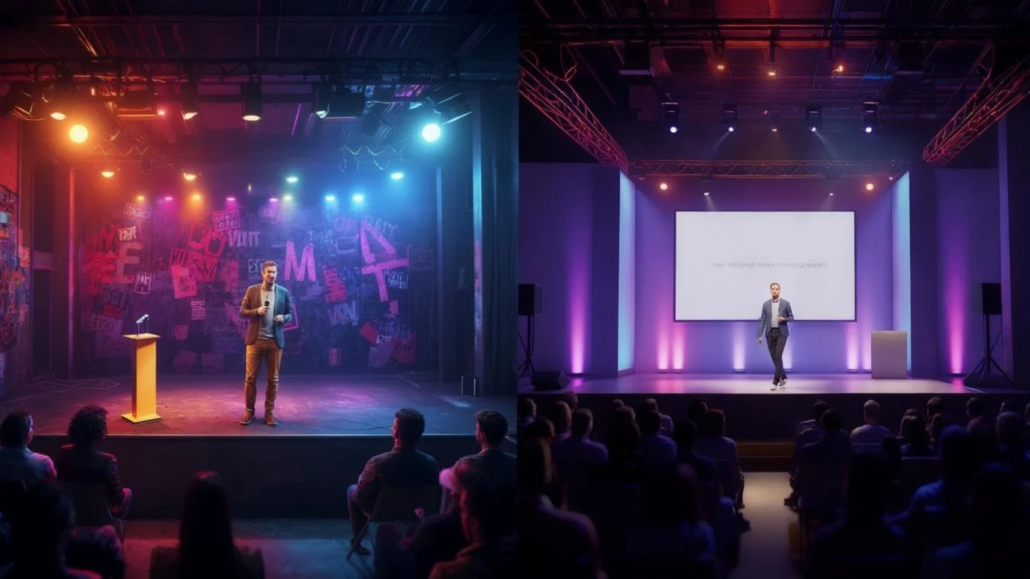
First off, lighting. It’s not just about making sure people can see you. Harsh lights can make you look like a ghost, and those weird shadows? Super distracting. And don’t even get me started on colored lights that make everything look like a cheap nightclub. Keep it simple. You want the focus to be on you, not the lighting guy’s experimental phase.
Effective Screen and Slide Design
Then there’s the screen. If your slides are tiny or the font looks like it’s for ants, good luck keeping anyone’s attention. Also, why do some people still use those clashing color combos? Neon pink on lime green isn’t edgy; it’s eye torture. Stick to high-contrast, easy to read stuff. And for the love of clarity, test it from the back of the room beforehand.
Props and set pieces can be cool, but only if they matter. That giant inflatable dinosaur might be fun, but if it’s just sitting there doing nothing, people will spend the whole time wondering about it instead of listening to you. Every piece on stage should have a purpose. Otherwise, it’s just clutter.
Ensuring Quality Sound
Sound’s another big one. If your mic keeps cutting out or there’s some weird echo, nobody’s going to remember your brilliant points. They’ll just remember how annoying it was to hear “testing, testing” every five minutes. Do a sound check early, and for once, actually listen to the tech person when they say something’s wrong.
Oh, and space. Ever seen a speaker trapped behind a tiny podium like they’re in timeout? Or worse, lost on a huge stage like they’re trying to find their way out of a maze? Make sure the stage layout matches your energy. If you’re a walk around and talk kind of person, give yourself room. If you’re more static, keep things tight so you don’t look awkward.
The goal is simple. Your audience should leave talking about your ideas, not the weird lighting or the font nobody could read. And honestly, if you’re not sure whether something’s distracting, ask someone. Better to find out before you’re stuck on stage wondering why everyone looks confused.
One last thing. Ever notice how the best talks feel effortless? That’s not luck. It’s because someone thought through all the little details so you didn’t have to. So yeah, don’t let bad design steal your spotlight. Literally.